No story. I just liked the picture.
Thursday, May 30, 2013
Playhouse Presents: Psychobitches
Thursday 9pm, Sky Arts 1
An amazing lineup of comic actors have a ball playing historical figures in therapy opposite Rebecca Front's ever-patient psychologist. Julia Davis puts a new twist on the poetry of Sylvia Plath. Samantha Spiro is a ping-pong Audrey Hepburn, Mark Gatiss a superb Joan Crawford to Frances Barber's inspired Bette Davis. Katy Brand stars as one of three sweary Brontë sisters. It's the comedy equivalent of eating a lot of biscuits. If you miss it you will forgo the funniest thing on TV this year
Funniest thing on TV ... Frances Barber as Bette Davis and Mark Gatiss as Joan Crawford in Playhouse Presents: Psychobitches. Photograph: Scott Kershaw/Sky Arts
Wednesday, May 29, 2013
Diet soda habit as bad for teeth as meth addiction
THURSDAY, May 23 -- Heavy consumption of diet soda can damage teeth as badly as methamphetamine or crack cocaine, a new study contends.
"You look at it side-to-side with 'meth mouth' or 'coke mouth,' it is startling to see the intensity and extent of damage more or less the same," said Dr. Mohamed Bassiouny, a professor of restorative dentistry at the Temple University School of Dentistry in Philadelphia.
Methamphetamine, crack cocaine and soda -- sweetened or not -- are all highly acidic and can cause similar dental problems, Bassiouny said in a study published recently in the journal General Dentistry.
The acid in soda is in the form of citric acid and phosphoric acid, Bassiouny said. Without good dental hygiene, constant exposure can cause erosion and significant oral damage, he said.
In his study, he found that a woman in her 30s who drank 2 liters of diet soda daily for three to five years experienced tooth rot and decay remarkably similar to that suffered by a 29-year-old methamphetamine addict and a 51-year-old habitual crack cocaine user.
The younger man had used methamphetamine for three years, and often downed two or three cans of regular soda a day because the drugs made his mouth so dry. The older man reported an 18-year history of crack abuse.
The woman said concerns about weight gain led her to choose diet soda over regular, and admitted that she had not seen a dentist in many years, according to the study. She also associated sweetened beverages with a higher risk of tooth decay.
Her teeth were soft and discolored, with many destroyed by erosion. She usually sipped the beverage directly from a can or a bottle, and held the soda in her mouth before swallowing, Bassiouny said.
"She also mentioned that when doing so, she habitually leaned on her left side against the arm of the sofa while watching television," he said. The "massive" damage to the left side of her mouth bore this out and resulted in what is called a collapsed bite.
"None of the teeth affected by erosion were salvageable," Bassiouny said. The woman had to have all of her teeth removed and replaced with dentures.
Methamphetamine and crack are known to ravage the mouths of users, and the two drug abusers needed all of their teeth extracted.
Besides exposing teeth to damaging acid, these illegal drugs reduce the amount of saliva in the mouth, providing less opportunity for the acids to wash away. The drugs also cause systemic health problems that affect dental hygiene. Previous studies have linked "meth mouth" with rampant decay.
A group representing soft drink manufacturers said this case study should not be seen as an indictment of diet sodas generally.
"The woman referenced in this article did not receive dental health services for more than 20 years -- two-thirds of her life," the American Beverage Association said in a statement. "To single out diet soda consumption as the unique factor in her tooth decay and erosion -- and to compare it to that from illicit drug use -- is irresponsible.
"The body of available science does not support that beverages are a unique factor in causing tooth decay or erosion," the group said. "However, we do know that brushing and flossing our teeth, along with making regular visits to the dentist, play a very important role in preventing them."
Dr. Eugene Antenucci, spokesman for the Academy of General Dentistry, said he was not surprised by Bassiouny's findings.
"From my experience, the damage that happens to people's mouths from cocaine or methamphetamine are degrees greater than what I see from soda, but I see a lot of damage from soda," said Antenucci, a dentist in Huntington, N.Y.
Damage from excessive soda consumption can cause "very deep brown stains, where it's actually eroded into the tooth, and the teeth are soft and leathery," he said.
Prevention is the best cure, Bassiouny said. How often you drink soda, how much you drink and how long it's in your mouth all are important factors. "You can help prevent it from happening by reducing any of those," he said.
Sugar-free soda is no better than regular soda when it comes to dental decay, Bassiouny added. "Both of them have the same drastic effect if they are consumed in the same frequency, the same amount and the same duration," he said.
Antenucci said people need to keep in mind that they are drinking something that is highly acidic when they pick up a soda.
"Knowing that, you limit it and understand that you need to clean your mouth afterward," he said. "Even simple water will wash away the acidity. And everyone should brush twice a day, if not more often."
Should people give up drinking soda? "You'd be better off if you didn't drink the soda," Antenucci said, "but in my mind there's not a reason for that extreme."
Friday, March 1, 2013
Are Microsoft's free Office Web Apps good enough for you?
When you think of Microsoft Office, you probably think of retail software that commands a premium price. Surprise! The latest iteration of the Office Web Apps are free and surprisingly powerful. How do they stack up against Google's offerings?
In the kerfuffle over the pricing and licensing for Office 2013 and Office 365, a lot of people seem to have overlooked one salient fact.
Over the past few years, Microsoft has steadily improved its free Office Web Apps to the point where they represent a credible threat to ... Microsoft Office.
Those of us who use Office apps daily tend to rarely see the Office Web Apps. And yet, they play an increasingly important role in the new Office ecosystem. The current Office Web Apps lineup includes the exact same programs as you'll find in Office Home & Student 2010 or 2013: Word, Excel, PowerPoint, and OneNote. But instead of costing $149 (MSRP) for three installations of Office 2010 or one of the 2013 flavor, the web apps are free. And they include 7GB of SkyDrive storage.
I took a much closer look at the Office Web Apps today, as well as revisiting my Google Drive and Google Docs account. (Please check out the screenshot gallery, including my carefully crafted captions, to get the full story.)
Now, let's get one thing clear right at the outset: If you think anyone will rigorously compare feature lists and specs for these two online services before choosing one, you are missing the point. People choose a free online productivity suite for two reasons:
- It's free.
- It can be used on any PC or Mac (and on many mobile devices) with any modern browser.
The tiebreaker is usually a quick count of how many friends, family members and co-workers are already affiliated with one system or the other. If your company has gone Google, that's going to sway you firmly in the Google Apps direction. If your company relies on Office apps like Word and Excel and uses an Exchange Server, that should tip you firmly in the Office direction.
Spoiler alert: Both of these online productivity suites pass the "good enough" test for casual home and student use, and even for most simple business documents. I'm not going to try to talk you out of using whichever one you've previously pledged allegiance to.
But still, I'm impressed by what I see in the latest Office Web Apps. Although these programs are technically web apps, they feel like desktop programs, with snappy performance and a real user interface. The Office Web Apps have adopted Microsoft's ribbon, so when you open a document in the Word Web App, it feels like you're running Word. You have to look closely at the ribbon to see the features that are missing.
By contrast, Google's interface is downright Spartan and decidedly old school, with a black-and-white theme and lots and lots of pull-down menus.
With its emphasis on round-trip formatting fidelity, the Office Web Apps are a natural for anyone who has to work with native Office file formats regularly. I found the process of converting documents to Google's formats cumbersome and far from perfect. On the other hand, you can open, edit, and save an Office document in the Word, Excel, or PowerPoint web apps and know that you won't lose any formatting.
I was also pleased to see that every Office Web App now supports simultaneous editing. If you share a document with someone from a free SkyDrive account, anyone with edit permissions can work on that document simultaneously, with your changes showing up nearly in real time.
The other edge that Office Web Apps have is on Windows 8 tablets. I was pleasantly surprised when I tested Office Web Apps in the modern (no plugins) browser on a Windows 8 tablet. The browser is smart enough to notice that touch-capable hardware is available and offers both a Touch Mode icon (identical in effect to the one in Office 2013) and a special touch-optimized quick formatting toolbar.
I was not so impressed by Google's performance with touch. Perhaps having a touchscreen on the pricey new Chromebook Pixel hardware will inspire Google's engineers to pick up their game a bit.
My point with this exercise, as always, is to help give you enough information to make an informed decision about which of these products is right for you. There's no right or wrong answer, only an answer that best satisfies the criteria that you consider most important.
But if you're unwilling or unable to pay the high prices that desktop software commands, it's good to know that there are solid free alternatives.
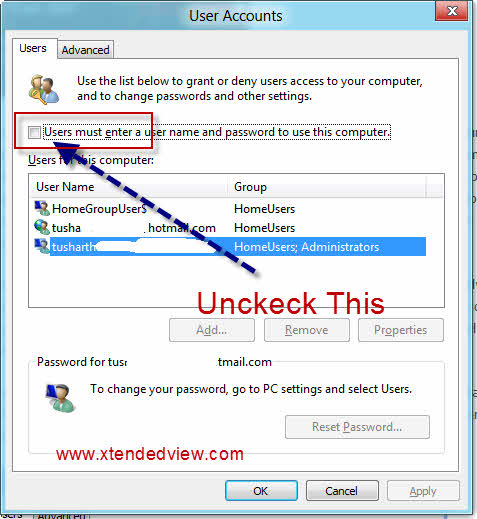
How Do I Disable the Windows 8 Log-on Screen
Thursday, February 7, 2013
Koch Brothers - Products To Avoid
Anything That Georgia-Pacific Produces
First are Georgia-Pacific consumer products: Angel Soft, Quilted Northern, and Soft n Gentle toilet paper; Brawny paper towels; any of the Dixie plates, bowls and napkins; Sparkle, Vanity Fair and Zee napkins; Georgia-Pacific's paper products.
Frankly, many dedicated TreeHugger readers caring about buying post-consumer recycled paper products or (better) using reusable alternatives are probably already avoiding these brands. But if you're not, start.
Second are Georgia-Pacific building products. The list is quite extensive so I'll just refer you to Shoq Value's rundown of them.
Invista's Fabrics, Fibers and Polymers
Third are a whole bunch of products under the Invista banner: Coolmax, Cordura, Solarmax, Supplex, and Thermolite fabrics, as well as those containing Lycra; Comforel fiberfill; Dacron fibers; Somerelle bedding products; Stainmaster carpets and Tactesse carpet fiber. There are also a number of resins on the list.
Oil Refining, Fertilizers, Chemical Production, Cattle Ranching
In addition to those three big areas, Koch Industries is involved in huge range of activities: Pollution control equipment, oil refining, fertilizers--as well as the Matador Cattle Company.
Now, in terms of impact it's important to remember that the Koch Industries is a humungous empire--one of the two largest privately held companies in the United States--so in practical terms a boycott would have to grow by leaps and bounds before having a big impact. But it does have to start somewhere, and even if it doesn't symbolic action is important.
If all of the background on this has passed you by, Think Progress is a good place to start to get back up to speed.?
Subscribe to:
Posts (Atom)